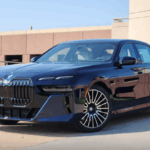
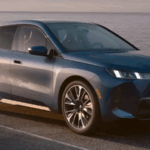
New 2026 BMW i3 Redesign: The Electric Icon Returns Stronger Than Ever – The 2026 BMW i3 marks a fresh chapter for BMW’s electric vehicle (EV) efforts in the United States. No longer the quirky city‑EV hatch of the past, this new iteration is expected to be a fully electric sedan built on BMW’s next‑generation “Neue Klasse” architecture.
For U.S. buyers interested in a BMW‑branded EV with premium materials, modern tech and a strong brand image, the new i3 aims to deliver. In this article we cover what’s new for 2026, interior/comfort & cargo, safety & driver assistance, U.S. trim levels & pricing estimates, performance & efficiency, whether you should consider it, U.S. price & release date, and our conclusion.
What’s New for 2026 BMW i3
All‑new generation
The 2026 BMW i3 for the U.S. essentially represents a clean‑sheet design: it is built on the Neue Klasse EV platform and is expected to arrive in U.S. showrooms as BMW transitions its EV portfolio. According to sources, BMW intends up to ~20‑30 % more energy‑density battery tech, an 800‑volt electrical architecture, and significantly improved charging and range.
In the U.S., the i3 is expected to be positioned alongside or slightly above the current BMW 3 Series in terms of pricing and prestige, offering a luxury EV alternative rather than a mainstream commuter EV.
U.S. Market Implications
-
For U.S. buyers, the new i3 signals BMW’s electric “mainstream premium” push rather than a niche urban EV.
-
The estimated starting price for the U.S. is around $50,000, though BMW has not yet confirmed final U.S. MSRP.
-
U.S. dealers will be key for accessibility; given BMW’s premium positioning, the i3 may carry typical luxury‑EV pricing and feature expectations in the U.S.

2026 BMW i3 Interior, Comfort & Cargo
Cabin Quality & Features
In the U.S. spec, expect the new i3 to carry BMW’s luxury interior standards: premium finishes, large digital displays, advanced infotainment, and comfortable front seats. BMW’s “Heart of Joy” central computing architecture is expected to underpin the user experience.
For U.S. buyers, materials such as leather or high‑grade synthetic options, ambient lighting, and refined ergonomics are likely standard or available.
Comfort & Cargo Practicality
-
While official U.S. cargo specs are not yet published, global information suggests the i3 sedan will have better rear‑seat usability than prior i3 hatchbacks.
-
For U.S. buyers: If you value rear‑seat space and cargo flexibility, you’ll want to check U.S. spec dimensions and trunk volume when they are released.
-
The shift from the older i3’s ultra‑compact city focus to a full sedan format means that the new i3 should appeal more to U.S. buyers looking for daily usability plus EV driving.
Safety & Driver Assistance
Standard & Available Features
In U.S. markets, luxury EVs such as the new i3 typically include strong driver‑assist systems. While BMW has not released full U.S. spec listings for the i3 yet, expectations include:
-
Standard safety items: Automatic emergency braking, frontal‑collision warning, lane‑keeping assist.
-
Available advanced systems: Adaptive cruise control, highway‑hands‑free assist, 360° cameras, and other premium driver‑assist packages.
Global information on BMW’s Neue Klasse platform suggests increased focus on software integration and over‑the‑air updates.
U.S. Buyer Considerations
-
Confirm which driver‑assist features are standard versus optional in the U.S. market—luxury EVs often bundle advanced systems in high cost packages.
-
Check for crash‑test ratings (U.S. IIHS/NHTSA) once the vehicle is available. Pre‑launch data may not include full U.S. testing results.
-
Maintenance & software update aspects are important—luxury EVs with advanced tech may have higher service costs in the U.S.

2026 BMW i3 Trim Levels & Pricing (U.S. Estimate)
U.S. Estimate Pricing
According to early reporting:
-
Starting U.S. price estimate: ≈ $50,000 for the base model of the 2026 BMW i3.
-
Higher‑trim versions (AWD, higher output, larger battery) will likely cost notably more—luxury EV premium applies.
U.S. Buyer Cost Considerations
-
The estimated starting price does not include destination, state/local taxes/incentives, optional upgrades or dealer mark‑ups—these will all add in the U.S. context.
-
When evaluating cost, U.S. buyers should compare total cost of ownership (electric charging cost, battery warranties, service, resale value) versus mainstream EVs.
-
Given BMW’s premium branding, U.S. buyers should assess whether the extra cost is justified by the desired features and brand experience.
2026 BMW i3 Performance, Towing & Efficiency
Performance Expectations
For the 2026 i3 (U.S. region) BMW has hinted at strong performance:
-
Dual‑motor AWD likely offered; global rumours suggest up to ~463 hp and ~400+ miles of range in some configurations.
-
With BMW’s next‑gen architecture and 800‑volt charging system, fast‑charging capability and long‑range are central to U.S. marketing.
Efficiency & Towing
-
Efficiency: The switch to the Neue Klasse EV platform means improved battery energy density and aerodynamics; U.S. buyers can expect competitive range for a premium EV once official EPA figures are released.
-
Towing: As with many luxury EV sedans, towing capacity may be limited or optional—U.S. buyers needing towing should check the official spec.
-
Driving experience: BMW emphasizes driving dynamics—even in EV form—so U.S. drivers looking for engaging performance plus luxury should find the i3 appealing.

Should You Consider It?
Pros
-
For U.S. buyers who want a premium‑brand EV, strong performance, modern technology and luxury cabin, the 2026 BMW i3 is a promising option.
-
The shift from BMW’s older i3 hatch to a full EV sedan format expands usability for daily U.S. driving.
-
Early pricing estimates (~$50,000) place it competitively in the premium EV market (though additional cost will apply).
Cons / U.S. Considerations
-
Although starting price is estimated, full U.S. specifications (battery size, range, charger rate, trims) are still pending—so some risk remains.
-
As a luxury EV, total cost of ownership in the U.S. may be higher (option cost, service, insurance, premium brand).
-
If your priority is maximum cargo space, towing, or lowest cost EV ownership, there may be better‑suited alternatives in the U.S. market.
-
If you are early in the EV transition and can wait, you may want to compare upcoming EV releases (including from BMW) once full specs and reviews are available.
If you’re a U.S. buyer looking for a premium EV with strong brand backing, modern technology and good utility, the 2026 BMW i3 is certainly worthy of consideration. If you prioritise cost‑efficiency, maximum utility or immediate availability, you might also evaluate other EVs or wait for full spec release.
2026 BMW i3 Price & Release Date
-
U.S. estimated starting price: ~$50,000 for the 2026 BMW i3.
-
Release timing for U.S. market: The i3 is expected to arrive in U.S. showrooms in late 2026 (or early 2027 model‑year) as BMW’s Neue Klasse EV rollout continues.
-
U.S. buyers should check with local BMW dealers for exact order books, build lead times, available trims in their region, and potential incentives or lease deals.
The 2026 BMW i3 offers a compelling luxury EV proposition for U.S. drivers seeking brand prestige, advanced technology, strong performance and daily usability. While not yet fully revealed in U.S. specification, estimated starting pricing (~$50,000), next‑gen battery/charging architecture and BMW’s premium credentials make it an appealing choice. If you value luxury, performance and EV innovation—and are comfortable with a premium price—then the BMW i3 should definitely be on your U.S. shopping list.