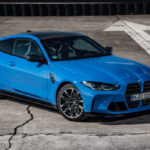
New 2027 BMW M3 Redesign: Specs, Features, Price & Release Date – The 2027 BMW M3 marks a pivotal moment for BMW’s performance‑sedan icon in the United States. As the brand signals a transition toward electrification and the next‑generation architecture, U.S. buyers looking for a blend of pedigree, sportiness and future readiness will be paying attention. In this article, we’ll explore what’s new for the 2027 M3, its interior, comfort & cargo features, safety & driver‑assist systems, U.S.-estimated trim levels & pricing, performance & efficiency, whether you should consider it in the U.S., the price & release date, and conclude with a summary and take‑aways.
What’s New for 2027 BMW M3
What’s changing in the U.S. market
-
The 2027 BMW M3 is expected to be the first generation to move fully to BMW’s next‑generation “Neue Klasse” EV architecture, codenamed “ZA0”, offering strong electric performance in addition to (or instead of) traditional combustion power.
-
Reports suggest the next‑gen M3 EV variant will deliver around 700 horsepower at minimum and may employ multiple electric motors (up to four) for all‑wheel drive in the U.S. market.
-
For U.S. buyers, this means the 2027 model may shift from the current twin‑turbo inline‑six (S58) architecture and manual option toward a more electrified, performance‑EV experience—changing the essence of the “M3” in the U.S. market.
-
While BMW has not yet published full official U.S. specifications for 2027, spy photos and leaks show prototypes testing on the Nürburgring, hinting at advanced aerodynamics, updated styling and new EV components.

U.S. market positioning
-
In the United States, the 2027 BMW M3 is positioned to retain its role as a performance sedan flagship—aimed at enthusiast buyers who demand dynamic capability, brand heritage and cutting‑edge tech.
-
Because of the shift to EV architecture, U.S. buyers may see a higher entry price and stronger performance spec than before, with trade‑offs in legacy features like the manual gearbox (which may be phased out).
-
For U.S. buyers, the decision will involve weighing traditional BMW M values (manual, combustion engine, analogue feel) versus the future of high‑performance electric driving.
2027 BMW M3 Interior, Comfort & Cargo
Cabin quality & features
-
U.S. spec of the 2027 M3 is expected to offer premium cabin materials, advanced infotainment architecture including large displays, premium upholstery options (including M Sport seats), and driver‑focused instrument layout reflecting the performance heritage.
-
Technology upgrades: For U.S. buyers, expect BMW’s latest software version, potential augmented‑reality HUD, and high connectivity—key to appealing in the premium U.S. performance market.
-
While specific U.S. cabin specs aren’t fully published yet, the expectation is that BMW will maintain the “Ultimate Driving Machine” feel, with enhancements to comfort and tech to appeal to U.S. buyers who want both sport and luxury.
Comfort & cargo practicality
-
Cargo space: Because the 2027 M3 likely shares many dimensions with the current sedan format or uses the same body style albeit electrified, U.S. buyers can expect sedan‑level cargo capacity—sufficient for everyday use though not as vast as large SUVs.
-
Rear‑seat space: As a performance sedan, rear seating will likely remain adequate for U.S. daily use but may not match the roominess of larger luxury sedans. U.S. buyers should test for adult comfort and ingress/egress.
-
For U.S. driver‑enthusiasts: If you primarily use the vehicle for performance and driving pleasure, the 2027 M3 will satisfy. If your priority is maximum cargo, family‑friendly rear space or SUV‑like versatility, you may want to evaluate whether the trade‑offs align with your needs.
Safety & Driver Assistance
Standard & available features
-
For the U.S. model year, expect the 2027 M3 to include a full suite of modern driver‑assistance systems: automatic emergency braking, lane‑keeping assist, blind‑spot monitoring, and possibly more advanced semi‑autonomous features in higher trims or optional packs.
-
Given BMW’s premium offering in the U.S., advanced features such as adaptive cruise control with hands‑free capability, surround‑view cameras, premium audio/infotainment will likely be available or standard depending on trim.
-
While official U.S. crash‑test ratings (IIHS/NHTSA) for the 2027 model may not yet be published, U.S. buyers should plan to verify those for their region.
U.S. buyer considerations
-
Confirm which driver‑assist features are standard for your U.S. region versus which are optional—and how much they cost because in the U.S. luxury performance models often bundle safety/tech in pricey options.
-
Maintenance and calibration of advanced systems can add to ownership cost in the U.S.—especially for high‑performance vehicles with complex electronics.
-
Given the shift toward EV architecture for the 2027 M3, U.S. buyers should verify warranty coverage, software update protocols and service network readiness for electric powertrains.
Trim Levels & Pricing (U.S. Estimate)
U.S. estimated pricing
-
Because the 2027 BMW M3 is not yet fully specified for the U.S., pricing data is preliminary. Industry commentary suggests a starting U.S. price significantly higher than the current generation due to electrified architecture and performance upgrades. For example, a base estimate of around $80,000+ or more is plausible, with higher trims/EV variants likely exceeding $100K.
-
U.S. buyers should expect that performance‑oriented trims (e.g., all‑wheel drive, higher power EV versions) will cost well above typical mainstream sport sedans in the U.S.
Cost & option considerations for U.S. buyers
-
U.S. buyers should budget beyond the base price: add destination fees, U.S. taxes, optional equipment (premium audio, carbon‑ceramic brakes, bespoke interior), and possible dealer mark‑ups.
-
If the 2027 M3 moves to full EV architecture in the U.S., add to your cost: home charger installation, higher battery warranty expectations, potentially higher insurance for performance EVs.
-
Compare total U.S. ownership cost: depreciation, battery warranty, maintenance/service availability, charging infrastructure in your region.
2027 BMW M3 Performance & Efficiency
Performance expectations
-
For the U.S. market, the 2027 M3 EV variant is expected to deliver around 700 horsepower as a base figure and possibly significantly more in higher trims (quad‑motor variants have been leaked).
-
Drivetrain: U.S. versions will likely be all‑wheel drive (AWD) given performance market demands; rear‑wheel drive variants may exist but electrified AWD gives better traction and appeal in U.S. conditions.
-
While BMW has not yet published acceleration or exact U.S. numbers, expect 0–60 mph times in the low‑3‑second range for performance versions.
Efficiency & towing
-
Efficiency: As a performance vehicle (especially EV), range will be important in the U.S., and the Neue Klasse architecture promises improved efficiency and charging speed. U.S. buyers should check EPA range numbers once released.
-
Towing: The M3 (performance sedan) historically is not designed for heavy towing. U.S. buyers who need towing capacity should consider a larger SUV or dedicated tow vehicle.
-
Driving dynamics: For U.S. buyers who prioritize driving engagement, the shift to electrified performance does not mean dulling the experience—BMW’s “Heart of Joy” software (in next‑gen EVs) is expected to enhance response and interaction.
Should You Consider It?
Pros
-
For U.S. buyers seeking a high‑performance sedan with strong brand heritage (BMW M), cutting‑edge architecture, and future‑ready electrified tech, the 2027 M3 is an attractive proposition.
-
The potential jump in power and performance (700+ hp) gives U.S. drivers a genuine super‑sedan experience while still retaining four‑door usability.
-
Interior upgrades, tech improvements, and likely premium features should appeal to U.S. buyers wanting luxury and thrill.
Cons / U.S. buyer caveats
-
Price: U.S. buyers should expect significantly higher cost than previous generations, especially for EV/performance trims.
-
Practicality: While still a sedan, performance focus means rear‑seat/cargo may not match larger luxury sedans or SUVs—a U.S. buyer with large family/cargo needs might find the trade‑off limiting.
-
If your priority is maximum cargo/towing, lowest total cost of ownership or you live in a region with limited charging infrastructure, you may want to compare alternative vehicles.
-
Because the model may shift to full EV architecture, U.S. buyers should verify charging infrastructure, battery warranty and long‑term support in their region.
If you’re a U.S. buyer who values performance, brand, cutting‑edge tech and you’re comfortable with the investment—and you don’t need massive cargo/tow capacity—then the 2027 BMW M3 is definitely worth serious consideration. If your priority is practicality, lower cost or widespread infrastructure rather than speed, you may want to evaluate other options.
2027 BMW M3 Price & Release Date
-
As of now, full official U.S. pricing for the 2027 BMW M3 has not been released. Early estimates suggest a base starting price above $80,000 for U.S. market; higher for performance/EV variants.
-
Release timing in the U.S.: The new generation M3 is expected to begin production around early 2027 with U.S. availability possibly later in 2027 or early 2028.
-
U.S. buyers should monitor BMW USA’s official announcements, contact dealerships for reservation/build‑slots, and check local incentives/availability categories.
The 2027 BMW M3 represents a significant step for the U.S. market: transitioning the legacy performance sedan into a future‑oriented vehicle with electrified architecture, higher power, and premium features. For U.S. buyers who are passionate about driving, brand, and performance—and are okay with higher cost and the trade‑offs of a performance sedan—it’s a standout option. However, U.S. buyers should ensure they assess practicality, charging/ownership infrastructure and cost fully before committing. In the highly competitive performance‑EV era, the 2027 M3 looks poised to carry the M badge forward—and it could be a very compelling choice in the U.S. if you’re ready for it.